GRAPHALLOY®
Bearings for Nuclear Applications

Summary
Nuclear applications present many problems for bearings, from harsh environments to temperature extremes. The GRAPHALLOY Bearing Material is ideally suited to tough nuclear applications. The material is self-lubricating, non-galling, can survive temperature extremes, and is available in different graphite-metal alloy combinations to meet your facilities' requirements.
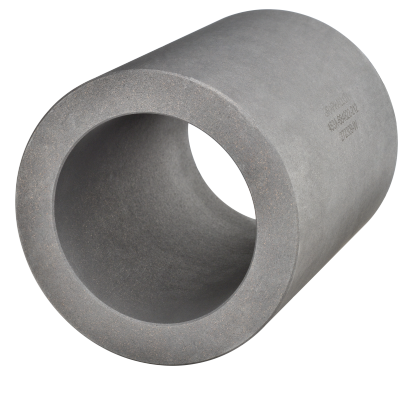
GRAPHALLOY, a graphite/metal alloy, is formed from molten metal, graphite and carbon. It is a uniform, solid, self-lubricating bushing and bearing material. It is corrosion resistant and does not collect dust or contaminants. It can operate in temperatures up to 1000°F.
Why GRAPHALLOY for Nuclear Applications
- Reduces downtime through ability to run dry
- Operates at temperature extremes up to 1000°F
- Improves efficiency through tighter clearances
- Runs submerged in spent fuel pool applications
- Requires no external lubrication and does not swell
- Corrosion resistant to many acids and water types
- Available with different metals to meet specific requirements
Applications in Nuclear Facilities
- Heater Drain Pumps
- Boiler Feed Pumps
- Circulating Water Pumps
- Spent Fuel Pool Bearings
- Bearings for Nuclear Research
Do you have a challenging nuclear application? Chat with us now, email or use our inquiry form
GRAPHALLOY Case Histories in Nuclear Power Plants
GRAPHALLOY Bushings Running Strong For 8 Years in Heater Drain Pump
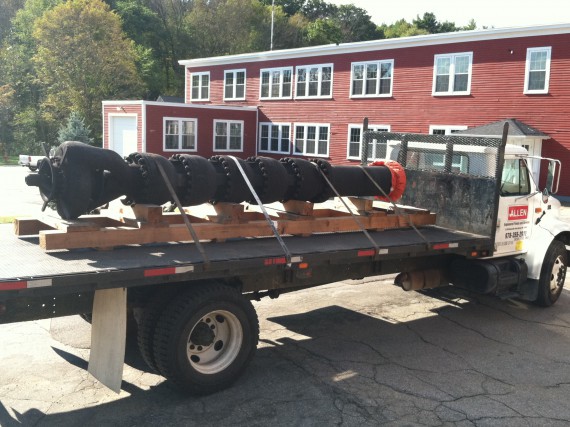
A full-service pump repair company received a contract to rebuild a heater drain pump for a nuclear power plant in the Northeastern United States. The multistage vertical pump had been in service for eight years, and it was time for a complete overhaul.
Eight years before, the original pump bearings were replaced with graphite/metal alloy bushings in order to increase meantime between repairs (MTBR), reduce maintenance and benefit from the self-lubricating and high-temperature characteristics of the material.
In a power plant, the heater drain pump sends the drain water directly back into the feedwater system, thereby increasing the efficiency of the power generation. The reliability of the heater drain pump is important for the power plant to run efficiently.
Upon inspecting the existing bushings, the pump repair company found that after eight years of service, the running clearance had opened (increased) by only 0.003 inches to 0.010 inches from the original specifications. Since they were going to do a complete pump overhaul, they decided to also replace the bushings. There had been a slight increase in vibration, but the bushings were still working well.
After this rebuild, the pump was put back into service and the power plant's maintenance manager expects it will be another eight years before they have to rebuild it again.
GRAPHALLOY Bearings Solve Spent Fuel Pool Bearing Issues
The water-pool option involves storing spent fuel assemblies under at least 20 feet of water, which provides adequate shielding from the radiation for anyone near the pool. To move the spent fuel rods, an X-Y Table is utilized. The X-Y table translates in either direction with linear bearings.
Operating conditions: Radioactive ambient water, light loading (5 to 10 lbs), linear motion at 0.5 ft/sec. The table operates from 4-8 hours at a time but may stay under water for weeks at a time.
Problem: The X-Y table linear bearings traditionally use bronze SAE 660 bushings but have been having premature wear and seizing issues. The SAE 660 bushings were corroding in the radioactive water. Contaminates from fuel rods will likely fall onto the XY table and shafts. Corrosion failure would occur when the table would be sitting idle.
GRAPHALLOY Solution: After replacing these bearings, the new GRAPHALLOY bearings have been operating for more than 12 months without corroding or seizing. The problem was solved.
GRAPHALLOY Bearings Provide Solution at Fermilab
Fermilab's MINOS (Main Injector Neutrino Oscillation Search) is designed to observe neutrino beam composition and energy distribution as it travels underground from Fermilab in Illinois to the Soudan Iron Mine in Minnesota. Neutrinos produced by the particle accelerator at Fermilab are "beamed" 450 miles through the earth.
To produce this beam of neutrinos, a proton beam starts at the Main Injector accelerator. The protons are magnetically focused onto a target. The particles of interest then decay into neutrinos. It is the mechanical adjustment of these focusing horns that requires GRAPHALLOY bearings.
Challenge: This operation runs in a particularly hostile environment. It is radioactive and corrosive and is exposed to nitric acid and ionized air. Metallic bushings cannot be used. In addition, polymers, organics, plastics and oil cannot be used in the operation. Finally, the bearings must run dry.
Solution: The unique properties of GRAPHALLOY provided the solution to this application. GRAPHALLOY bushings were used to target and position the horns because other materials would corrode and freeze up.

